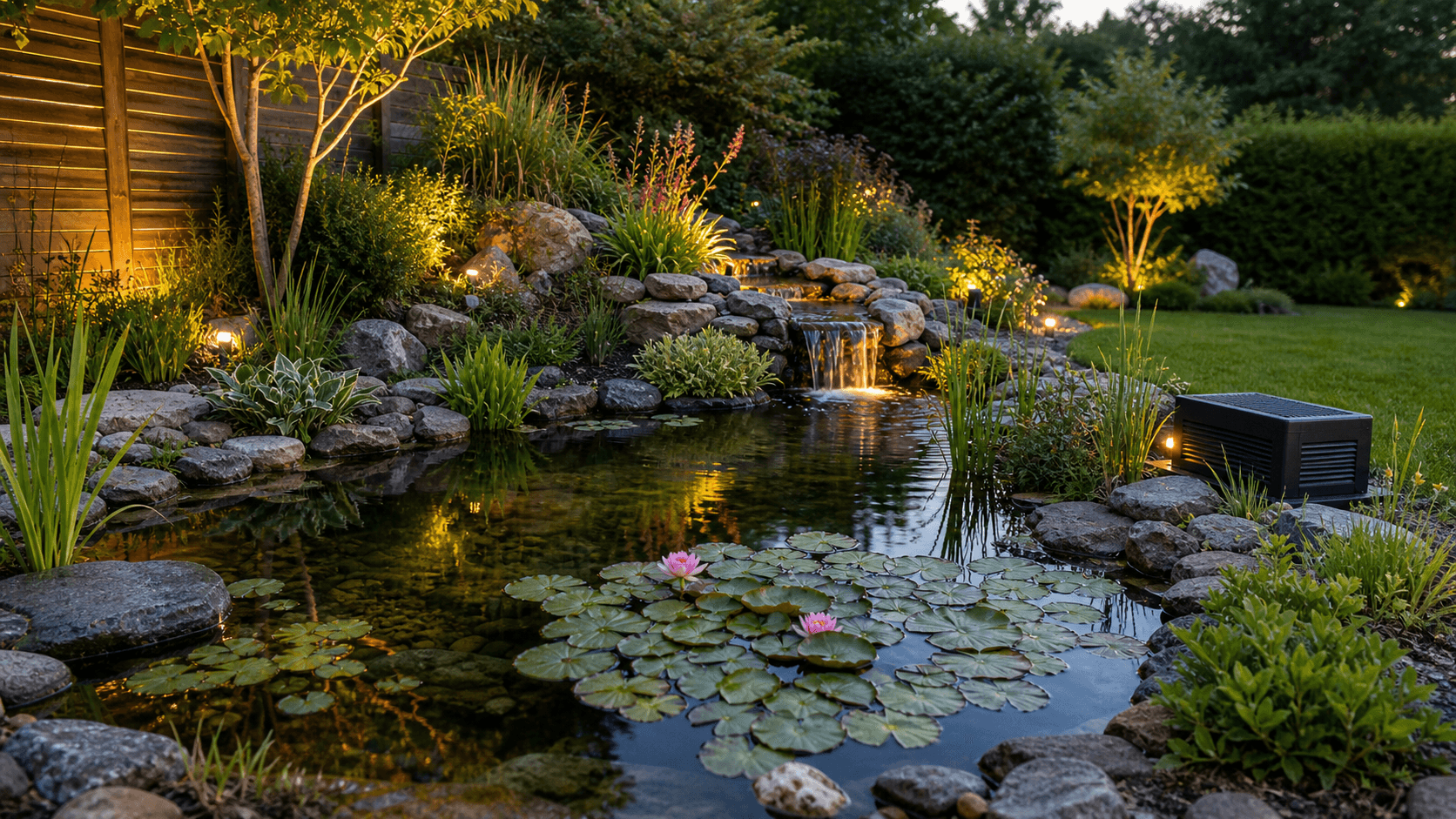
Why garden ponds matter
A well-planned garden pond can transform an outdoor space from ordinary to restorative, adding movement, sound, and wildlife interest in a way few other home and garden features can match. In the home and garden category, ponds occupy a special place because they combine design, ecology, and practical DIY. Whether your aim is to create a quiet wildlife refuge, a family focal point with a gentle waterfall, or a modest feature beside a patio, the decisions you make at the planning stage will shape your result for years. The rewards are compelling—birds bathing at the shallows, dragonflies skimming the surface, and a calm backdrop for evenings outdoors—but success depends on a thoughtful balance of location, equipment, planting, and ongoing care. Many newcomers discover that the biggest hurdles aren’t the dig itself but the choices that come before it: how big to go, how deep to dig for the UK climate, which liner is best for the soil conditions, and what size of pump and filter will keep the water healthy. A common misconception is that ponds are “fit and forget.” In reality, the lowest-maintenance ponds are those built with the right components from day one and set up to work with nature, rather than against it. That means allowing for shelves to support marginal plants, planning electrics safely, and matching filtration to the expected water volume. Retailers with specialist focus can help simplify those early decisions. For example, the wide selection of liners, pumps, filters, and complete kits available through pondkeeper.co.uk offers a way to compare options side by side and select according to budget and goals. If you are creating a wildlife pond, you might emphasize native planting and skip fish entirely, which often simplifies filtration. If you are considering ornamental fish, you’ll likely choose a slightly deeper design, a reliable pump, and a filter with a built-in ultraviolet clarifier to help manage green-water algae. Either way, the principles below will help you design a pond that is attractive, resilient through the seasons, and sized to your space. This guide walks through core considerations—site selection, sizing, liner types, pumps and filters, plant choices, safety, and seasonal care—so you can move from idea to finished water feature confidently. It brings together practical steps and rules of thumb for UK gardens, while leaving room for personal style and the unique conditions of your plot. With a plan in place, the building phase becomes a straightforward sequence rather than a guessing game, and maintenance becomes routine rather than a chore.
Key choices and equipment
Begin with location. Most ponds thrive with a balance of light and shade: around four to six hours of sun is usually enough to support aquatic plants and water clarity, while afternoon shade helps limit summertime algae growth. Avoid placing your pond directly beneath large trees if you can, as heavy leaf fall increases maintenance and roots can complicate excavation. Think about sightlines from windows, seating areas, and paths; a pond you can see and hear is more enjoyable and easier to monitor. Depth is a functional choice. For a wildlife-focused feature, a varied profile with shallow shelves of 10–20 cm and a deepest point around 40–60 cm works well. If you plan to keep ornamental fish, aim for deeper water—often 60–90 cm or more—so temperature fluctuates more slowly and the pond remains more stable in winter. In colder parts of the UK, depth also provides a refuge that helps the pond resist freezing solid. Shape should be simple and flowing; curves allow smooth liner placement and create natural planting zones. Liner selection comes next. Flexible EPDM rubber liners are known for durability and flexibility, coping well with gentle curves and irregular shapes. PVC liners are typically more budget-friendly and suit smaller, simpler designs. Preformed rigid shells can be a fast option if your chosen shape and size match an available form. Whatever you pick, protect the liner from stones and roots with an underlay fleece or a layer of soft sand. To estimate liner size for a flexible liner, use: liner length = maximum pond length + 2 × maximum depth + at least 0.5 m overlap; liner width = maximum pond width + 2 × maximum depth + at least 0.5 m overlap. Err on the generous side; trimming is easier than stretching. Pumps and filters keep water moving and clear. As a broad guide, aim to circulate the entire pond volume about once per hour for fish ponds and somewhat less for wildlife ponds. When sizing a pump, factor in head height for waterfalls or streams, as lifting water reduces flow; manufacturer pump curves help you match expected conditions. Filters come in pressurized (good for flexible siting and running a waterfall) and gravity-fed box styles (often easy to maintain). An integrated ultraviolet clarifier helps address green-water algae by clumping suspended algae so the filter can capture it. Position the pump where it won’t suck in debris directly—slightly raised from the bottom—and route power through an RCD-protected circuit. Where in doubt, consult a qualified electrician for outdoor connections. For an overview of kits and components that suit different budgets, you can explore offers and compare specifications before you dig.
Building steps and care
Before the first shovel of soil moves, sketch your pond at scale and mark it on the ground with rope or sand. Measure length, width, and planned depth; this allows you to calculate volume, which will guide pump and filter sizing. As you dig, create shelves around the perimeter for marginal plants, and keep the deepest zone compact rather than sprawling. Remove sharp stones and roots, then add underlay and the liner, smoothing out large folds without worrying about perfect flatness—water hides most small creases. Fill slowly, allowing the liner to settle into shape, and only then set edging stones so they sit level with a slight inward tilt to keep rainwater runoff out. If using tap water, adding a dechlorinator helps protect developing biology and any future fish. Plant early to give your pond a head start; combine oxygenators, marginals, and a lily if you have still water and sufficient sun. If you intend to add fish, introduce them gradually after filters have had time to mature. In the early weeks, feed lightly and test water if you keep fish—ammonia and nitrite should remain at safe levels, and pH should be steady. Wildlife-focused ponds benefit from sloped sections or small ramps to help hedgehogs and other animals exit safely, and low fencing or careful siting can support child safety. Seasonal care keeps things running smoothly. In spring, rinse filter foams in a bucket of pond water rather than tap water to preserve beneficial bacteria, and thin plants as growth resumes. Through summer, top up as needed, ideally with small, frequent additions to reduce sudden chemistry changes. In autumn, netting can help catch leaves; remove decaying matter to limit nutrient buildup. In winter, avoid sealing the surface completely—an air stone or small pond heater can maintain a gas-exchange opening. Never strike ice, as shock waves can distress fish and potentially damage the liner. For common issues, act gently and consistently. If blanket weed appears, hand-twist it out, improve shading through plants, and avoid overfeeding fish. Cloudy water often settles once your filter matures; check that your pump and filter are sized appropriately and clean according to guidance. Suspected leaks can be diagnosed by monitoring the waterline; if it consistently stops at one height, inspect the liner edge or waterfall at that level. When budgeting, prioritize a quality liner and a correctly sized pump; complete kits can simplify choices and offer good value. For product guidance and setup tips tailored to typical UK garden conditions, you can learn more and review the support resources provided by pondkeeper.co.uk.
Recap and next steps
A thoughtful garden pond starts with good planning: pick a spot with balanced light, choose a shape you can maintain, and size your liner and equipment to the water volume you expect. Focus on a durable liner, an appropriately sized pump and filter, and early planting to set natural processes in motion. Depth and profile should reflect your goal—shallower shelves and varied contours for wildlife-friendly designs, and a deeper zone if you plan to keep ornamental fish. Build with safety in mind by routing electrics correctly and incorporating gentle exits for wildlife. Once established, a light but regular maintenance rhythm—seasonal plant care, measured feeding if you keep fish, and occasional filter servicing—keeps your water clear and your pond resilient through UK seasons. Whether you are upgrading an existing feature or starting from scratch, treating your pond as a living system pays dividends. Small, consistent actions typically outperform big, occasional fixes. If you would like to compare liners, pumps, filters, and complete kits, pondkeeper.co.uk offers a focused range that can help you match products to your plan and budget. With the essentials covered and a realistic routine in place, your pond can become a long-lasting highlight of your outdoor space.