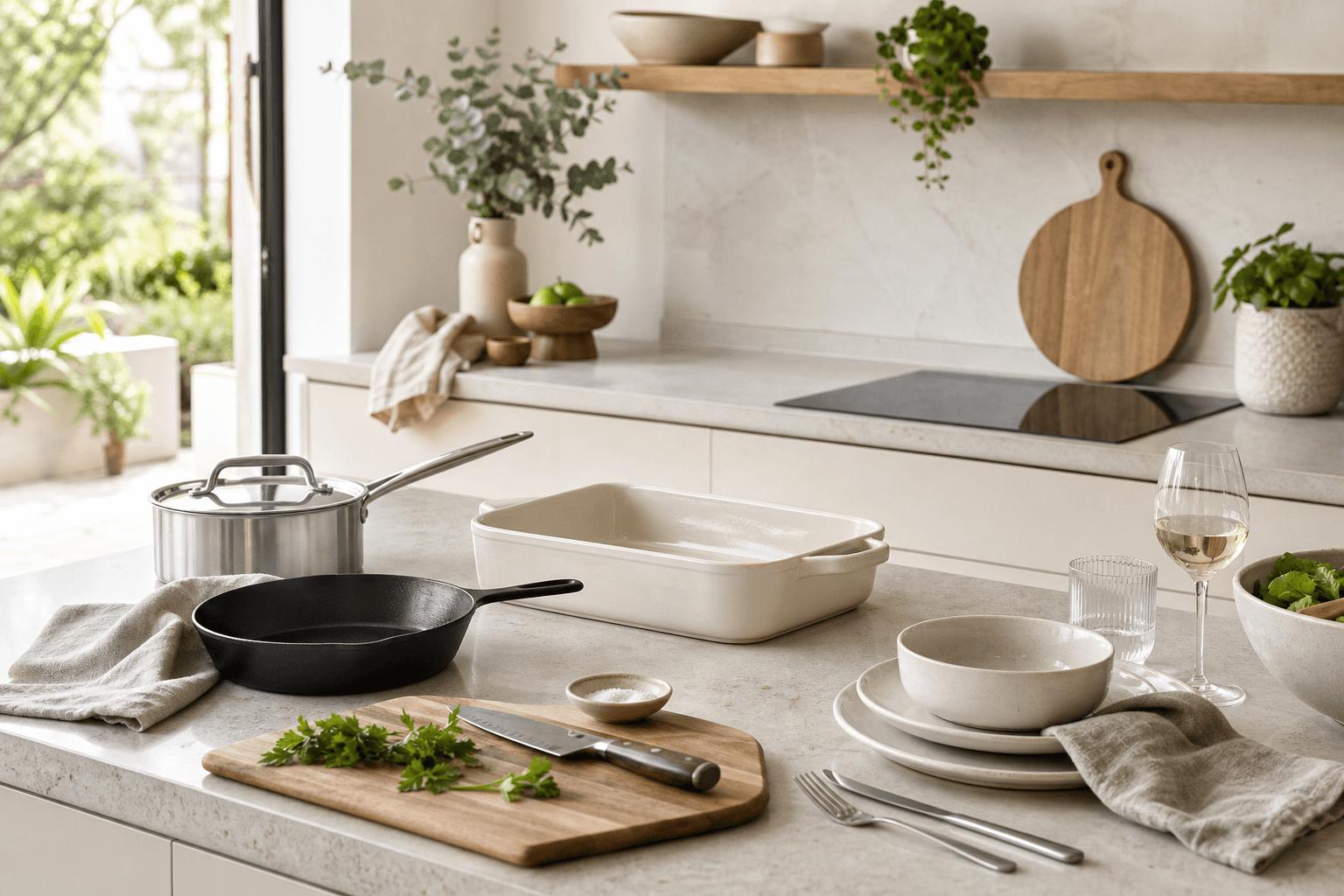
Why kitchenware choices matter
A well-planned kitchen setup is the quiet engine behind everyday meals, special-occasion spreads, and the simple joy of brewing a perfect cup of tea. In the home and garden category, kitchenware sits at the point where function meets habit: the right saucepan helps you simmer without scorching, the right knife lets you prep faster and more precisely, and baking tins shaped for your oven help cakes rise evenly. When these choices align with your cooking style, stovetop, and storage space, you spend less time fighting tools and more time actually cooking. From seasoned entertainers to first‑home cooks, shoppers at house.com.au often start with the same questions: What are the core pieces I need? Which materials are best for my stove and recipes? How do I balance quality with budget without overbuying or duplicating tools? Starting with a plan helps avoid two common pitfalls—buying a big set that leaves half the pieces untouched, or collecting random items that don’t work as a system. Thinking in categories can clarify priorities. For cookware, assess your most frequent tasks: boiling, sautéing, searing, stewing. For knives, consider the basics—chef’s knife, paring knife, serrated bread knife—and a safe cutting board that’s kind to blades. For bakeware, note your go‑to bakes and the tins or trays they require. For dinnerware and glassware, focus on durability, stackability, and how easily pieces fit in the dishwasher or cupboard. Material matters, too. Stainless steel offers durability and even heating, especially with an aluminum or copper core. Cast iron retains heat for searing and oven finishing. Nonstick helps with delicate foods and easy cleanup, as long as you follow care instructions. Enamelled cast iron gives browning power with a simpler maintenance routine. For bakeware, aluminized steel and quality aluminum promote consistent browning, while ceramic and glass can be useful for casseroles and oven‑to‑table serving. When you evaluate options by task, material, and maintenance, your kitchenware becomes a focused toolkit rather than a cluttered drawer.
Materials, sets, and care
Choosing between open-stock pieces and boxed sets depends on your cooking routine and kitchen size. Sets can be cost‑effective when you’ll use most pieces frequently; they also provide a cohesive look and lid compatibility. Open stock is ideal when you know exactly what you need—say a 26 cm skillet for weeknight stir‑fries or a 5 L Dutch oven for batch cooking. Whichever route you take, check handle comfort, lid fit, and overall weight; a pan that feels nicely balanced in your hand will likely see regular use. If you cook on induction, verify that the base is compatible. For oven work, confirm the maximum safe temperature for pots, pans, handles, and lids. Material properties shape results and care. Stainless steel with a multi‑ply core distributes heat broadly and stands up to high‑heat searing and deglazing, but it may need technique (preheating, oil timing) to minimize sticking. Nonstick excels for eggs, pancakes, and sticky sauces; it benefits from medium heat, silicone or wooden utensils, and gentle cleaning to preserve the coating. Carbon steel is responsive and lighter than cast iron, developing a seasoning over time; it rewards a bit of routine care. Enamelled cast iron is versatile from stovetop to oven and offers easier cleaning than raw cast iron, though it’s still weighty. Bakeware follows similar trade‑offs: aluminized steel resists warping and promotes even browning, while ceramic or glass may be preferable for casseroles and make attractive serveware. Knives deserve special attention. A well‑made chef’s knife that fits your grip and preferred blade length (often 20 cm) will accomplish most prep tasks. A paring knife handles fine work, and a serrated bread knife slices through crusts and soft produce. Try a pinch grip near the bolster to assess balance, and consider maintenance: honing keeps edges aligned, while periodic professional sharpening restores bite. For tableware, look for chip resistance and stackability; stoneware is sturdy for daily use, porcelain can be a bit lighter and refined, and tempered glass offers durability for drinkware. Wherever you shop, it helps to compare like‑for‑like by capacity, base thickness, and weights, and to read clear product descriptions; you can also explore offers to understand how features relate to price. Finally, factor in care routines: hand‑washing may extend the life of certain finishes, and avoiding harsh abrasives can keep cookware and dinnerware looking new longer.
Plan, compare, and upgrade
A simple plan prevents overbuying and ensures you get real value from every piece. Start by mapping a typical week of meals and listing the tools each dish requires. If you regularly boil pasta, sauté vegetables, and sear proteins, a triad of saucepan (roughly 2–3 L), sauté pan with lid (24–28 cm), and frypan or skillet (24–28 cm) will do most of the work. Add a stockpot for stocks and soups if you batch cook. Bakers might prioritize a half‑sheet tray, muffin tin, loaf pan, and a 23 cm round cake tin, then expand into specialty shapes later. For knives, invest first in a chef’s knife you genuinely enjoy using, then add a paring and a bread knife as needed. When comparing products, examine the practical details that affect daily use: rim design for drip‑free pouring, helper handles for heavy lifts, interior volume markings for quick measuring, and lids that vent or seal depending on what you cook most. Weight and base thickness can hint at heat retention and distribution, while a flat, stable base reduces hot spots on many stovetops. Consider storage early. Nesting cookware saves cupboard space; universal lids reduce duplication; magnetic strips or in‑drawer organizers keep knives safe and accessible; and bakeware that stacks neatly prevents scratched coatings. If you’re replacing older pieces, try upgrading your highest‑use items first so improvements show up in every meal. Look for transparent specifications—base construction, oven‑safe temperatures, coating details—and choose items with care instructions that match your routine. If you prefer dishwashers for daily cleanup, verify suitability. Finally, shop at a pace that suits your budget and cooking goals. Seasonal promotions and bundle pricing can help, but focus on pieces you’ll use weekly rather than chasing the lowest price per item. Reading verified customer feedback can reveal patterns about durability or performance across real kitchens. When you’re ready to check current availability or compare options side by side, browsing the official site can streamline decisions, especially if you filter by material, stovetop compatibility, size, and recommended use. Over time, a measured approach—plan, compare, and upgrade—builds a kitchen you’ll rely on for years.
Key takeaways and next steps
A reliable kitchen starts with a short, focused list: cookware sized for your most frequent recipes, a well‑fitting chef’s knife plus a few supporting blades, bakeware that suits your oven and bakes, and durable dinnerware that stacks and cleans easily. Materials determine both performance and maintenance, so match stainless steel, cast iron, nonstick, carbon steel, ceramic, or glass to how you like to cook and clean. Compare items by capacity, base construction, lid fit, handle comfort, and oven or induction compatibility, and check care instructions before buying. Build gradually—prioritize the pieces you reach for every week and upgrade where you’ll feel improvements immediately. When you’re ready to shop, use clear filtering, read straightforward product descriptions, and consider verified customer reviews to confirm fit for your kitchen. With thoughtful planning and steady upgrades, your setup will feel cohesive rather than cluttered, helping every meal come together with less effort and more consistency.