Why pressure washers matter
Few home and garden tools deliver a bigger visual payoff in less time than a well-chosen pressure washer. Patios brighten, fences shed years of grime, and cars, bikes, and garden furniture look refreshed with far less scrubbing than traditional methods. For many households, the decision isn’t whether to get a pressure washer but how to pick a model that suits surfaces, storage space, and budgets while keeping operation safe and efficient. That’s where a focused look at specifications, accessories, and best-use practices helps clarify the path from research to reliable results. The category spans compact units for seasonal tidying to more capable options designed for frequent deep cleaning; with the right match, you can tackle algae on pavers, mildew on siding, and mud on wheel arches without overdoing it. A central consideration is that pressure and flow rate work together: pressure (in bar or PSI) helps lift grime, while flow (in liters per hour) washes it away. Balance matters, because excess pressure on delicate substrates can cause damage, while too little can extend tasks or leave streaks. It’s also worth noting how modern pressure washers improve ease of use with quick-connect fittings, hose reels, and adjustable lances that shift from gentle rinsing to targeted cleaning. Product families at kaercher.com range from compact portable units to sturdier home-and-garden machines, enabling buyers to map common chores—like rinsing pollen from outdoor cushions, cleaning wheelie bins, or refreshing decking—to an appropriate power band and accessory set. In practical terms, a good setup can be more water-efficient than an unrestricted garden hose because the stream is pressurized and targeted. At the same time, technique matters—starting at a sensible distance from the surface, using the right nozzle setting, and working in consistent passes. Homeowners also weigh convenience features such as onboard storage for lances and cables, integrated detergent systems, and hose lengths that comfortably reach a driveway or far corner of a terrace. The result is a tool that doesn’t just speed up cleaning day but also encourages regular upkeep, which typically keeps outdoor materials looking better for longer and can prepare surfaces more effectively for sealing or repainting. Taken together, these realities make a compelling case for pressure washers as a core home and garden helper rather than a niche luxury.
Key features and examples
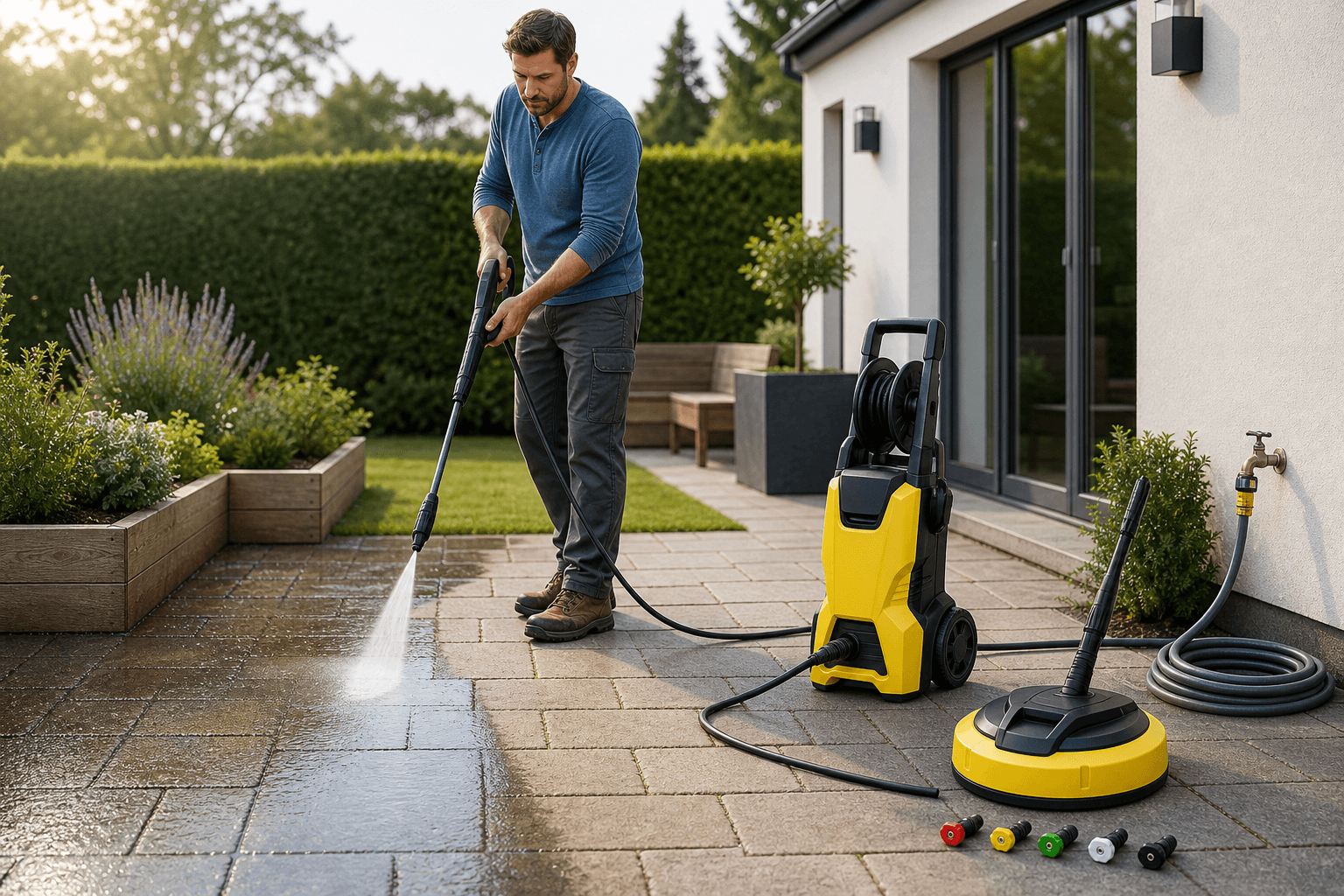
When comparing pressure washers, three specs shape performance: maximum pressure, water flow, and motor/pump design. As a simple rule, higher pressure (bar/PSI) increases cutting action on grime, while higher flow (liters per hour) improves rinsing and coverage. Entry-level models typically sit around 100–130 bar with moderate flow for bikes, garden furniture, and light patio work. Midrange units rise to about 130–145 bar, balancing power and portability for cars, decks, and larger paved areas. Heavier-duty home models may reach 145–180 bar and higher flow, suitable for stubborn stains on stone or unsealed concrete when used correctly. If you regularly clean large driveways or heavily soiled masonry, the added capacity can save time, but it calls for careful nozzle selection and distance control to protect surfaces. Build details matter for durability and comfort. Look for user-friendly hose management (reels or guides), quick-connect fittings, and secure lance storage so setup and stow-away feel seamless. Many homeowners appreciate variable pressure lances to fine-tune output mid-task, plus dedicated dirt blaster nozzles for ingrained contamination on resilient materials. Some models offer smartphone guidance or performance indicators that help select settings for specific surfaces—useful if you’re new to pressure washing and want reminders for recommended distances and detergents. Equally important is the motor/pump system: induction motors are often quieter and can be longer-lasting than brushed universal motors, while water-cooled designs in select models aim to distribute heat more effectively during sustained use. Detergent delivery can also streamline results. Integrated bottles or drop-in systems help apply soaps for cars, siding, or stone before switching back to rinse. The right cleaning agent helps break down films so you can rely on lower pressure on delicate areas, then rinse clean to avoid streaking. Storage features such as telescopic handles, stable wheelbases, and compact footprints are practical if you’re working in tight sheds or garages. Many retailers present comparison charts and tooltips; browsing brand model pages where you can see features and specifications side by side makes it easier to narrow down choices. Accessories pay outsized dividends. A surface cleaner with twin rotating jets speeds up patios and reduces striping. Foam nozzles can improve car washing by creating clingy suds. Soft brushes help agitate road film on paintwork, while extension wands raise reach for tall fencing. Finally, inline water filters protect the pump, and quick-release couplers simplify swapping nozzles between tasks. Thinking in terms of a base unit plus a few targeted accessories often yields a more capable and adaptable setup than stepping up to an oversized machine you seldom use at full power.
How to choose and use
Start by listing your top jobs and surfaces. If your routine includes rinsing bicycles, outdoor toys, and small garden furniture, a compact 100–130 bar unit should suffice with the standard fan nozzle. Add car washing and seasonal patio cleaning and a midrange unit with higher flow and a surface cleaner attachment can save time. Large stone terraces, textured concrete, or persistent algae point toward more capable models, paired with dirt blaster nozzles used judiciously. Also note practical constraints: storage space for hoses and lances, the reach from your water source to the farthest corner of the yard, and available electrical outlets. This quick assessment clarifies your short list and the accessories you’ll value most. If you’re still comparing, many brand pages summarize compatible tools and recommended tasks so you can learn more before you buy. On setup day, connect the garden hose with a clean inlet filter, release any kinks, and purge air from the pressure hose by running water through the gun (machine off) until a steady stream flows. Fit the appropriate nozzle or adjustable lance, then start with the lowest effective pressure. Work at a steady pace with overlapping passes, keeping a consistent distance—closer for resilient stone, farther for painted wood or vehicle paint. On large patios, a surface cleaner helps maintain even spacing and reduce streaks; on vehicles, pre-rinse, apply foam or detergent, allow brief dwell time within label directions, agitate with a soft brush, then rinse top to bottom. Always test an inconspicuous area first. A few simple habits keep performance consistent. Rinse accessories after detergent use, inspect and clean the inlet screen, and store hoses coiled loosely to reduce kinking. In colder climates, drain residual water from the pump and hoses before storage, and consider a pump-protection fluid if recommended by the manufacturer. For safety, wear eye protection and sturdy footwear, keep hands clear of the spray, avoid use on ladders, and maintain awareness around electrical outlets. Be mindful of local guidance on water use and runoff; directing wastewater to gravel or soil rather than storm drains is a practical courtesy. Finally, plan jobs for daylight hours to respect neighbors, especially when using higher-pressure settings. With a right-sized unit from a trusted range, clear techniques, and a few well-chosen accessories, you’ll find routine cleaning faster, tidier, and easier to sustain.
Final thoughts and recap
A good pressure washer turns demanding chores into a manageable routine, especially when you match power, flow, and attachments to your real-world surfaces. Compact units suit light tasks like outdoor furniture and bikes; midrange models balance car washing and patio refreshes; and higher-capacity options help with stubborn grime on stone or unsealed concrete when handled with care. Features such as adjustable lances, integrated detergent systems, and tidy storage improve everyday usability, while accessories like surface cleaners and foam nozzles can significantly speed results and reduce streaking. Before purchasing, consider your top targets, available storage, and reach to water and power. During use, start gently, test a small area, and maintain consistent passes at an appropriate distance. Afterward, clean filters, drain lines, and store the machine somewhere dry. With these basics in place—and by referring to clear model comparisons and compatibility notes—you can approach seasonal cleanups with confidence. Whether you’re sprucing up a terrace, rinsing road film from a hatchback, or preparing a fence for a new coat of finish, the right pressure washer and a thoughtful workflow will help you achieve neat, repeatable results throughout the year.