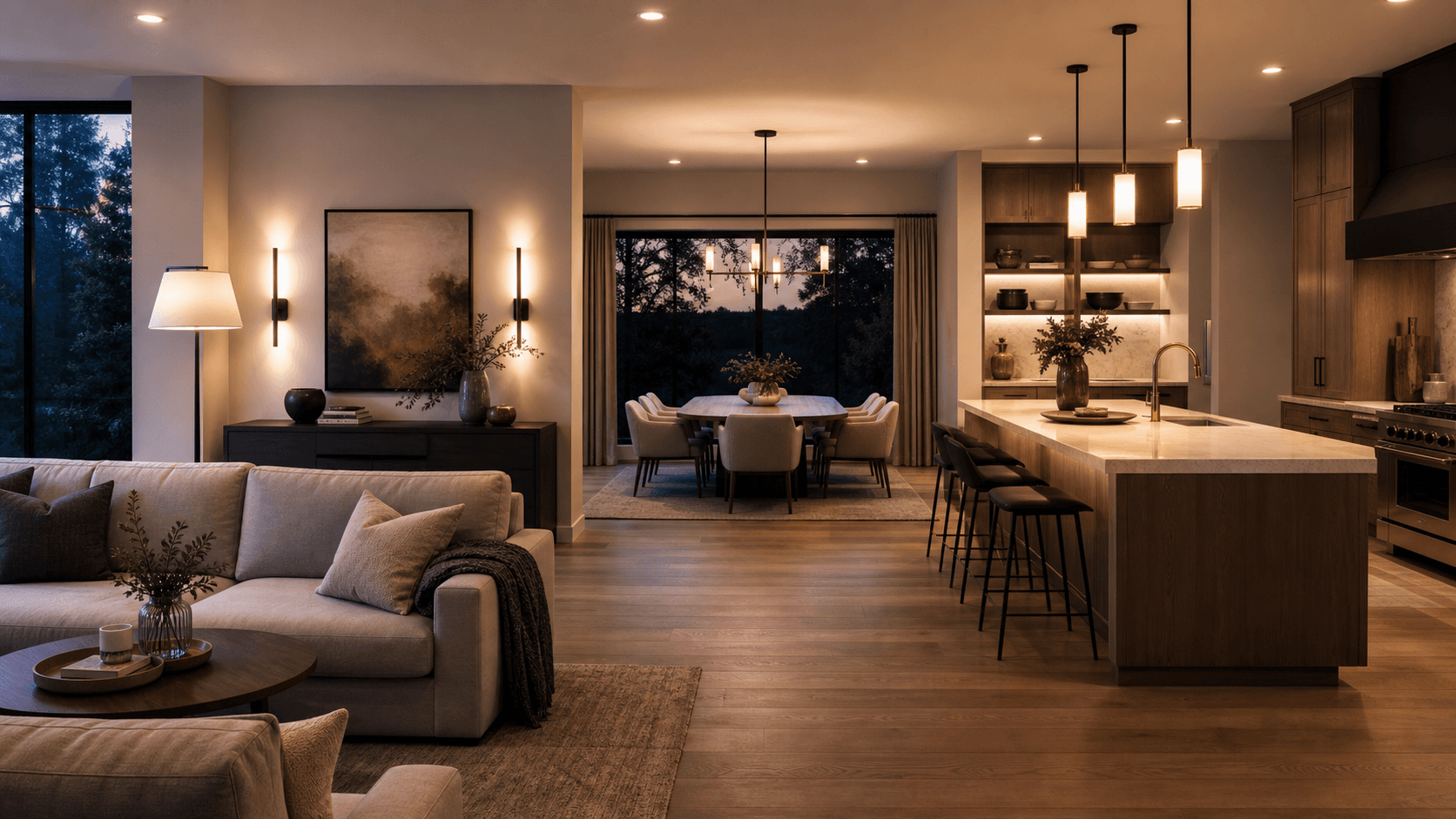
Why layered lighting matters
Great rooms feel comfortable, look cohesive, and function well at every hour, and lighting is the quiet force that helps it all come together. In the home and garden category, lighting deserves the same planning attention as furniture and paint because it shapes how color appears, how tasks get done, and how welcoming a space feels. A thoughtful plan solves common pain points—glare at the kitchen island, shadows at the bathroom mirror, or a living room that feels flat after sunset—by balancing three layers: ambient, task, and accent. Ambient lighting provides overall illumination, task lighting delivers brighter, focused light for work or grooming, and accent lighting adds depth by highlighting art, architecture, or textured surfaces. When these layers are combined, each room can move seamlessly from bright and functional to soft and relaxing with a dimmer or scene change. The language of lighting can seem technical, but a few fundamentals simplify decisions. Instead of wattage, which measures power use, compare brightness in lumens. Color temperature (measured in Kelvin) influences mood: warmer tones around 2700K–3000K feel cozy and residential, while 3500K–4000K looks cleaner and crisper, which can be helpful for work zones. High color rendering (a CRI of 90 or above) keeps finishes, fabrics, and skin tones looking natural. Beam spreads determine how widely light is distributed—narrow beams emphasize a painting, while wider beams wash a wall or disperse light uniformly across a tabletop. Controls matter, too; dimmers and smart systems let you adapt quickly for cooking, movie night, or hosting. Safety and suitability are part of a complete plan. Bathrooms and covered porches often call for damp-rated fixtures, while fully exposed outdoor locations require wet-rated products. Integrated LED fixtures can be slim, efficient, and long-lasting, while fixtures with replaceable bulbs offer flexibility if you like to change looks seasonally. For inspiration and side-by-side comparisons, retailers like lumens.com curate contemporary and classic options, provide specification details like CRI and color temperature, and show how pieces scale in real rooms. Thinking about lighting early in a renovation or refresh helps you avoid common trade-offs. Junction box positions, ceiling heights, window orientation, and finish colors all affect how a fixture will read in the space. Even if you are not remodeling, incremental upgrades—such as adding a dimmer, swapping a dated flush mount for a semi-flush with better optical design, or layering in a pair of wall sconces—can dramatically improve comfort and appearance without rewriting your floor plan. With a clear framework, the next step is translating these principles into specific rooms and fixtures that match your style and budget.
Key features and options
Start by mapping fixtures to the jobs they need to do. In the kitchen, think in layers: recessed downlights or a well-designed surface mount for ambient light, pendants or a linear suspension to anchor the island, and under-cabinet lighting that brightens countertops without shadows. Over an island, pendants can be spaced so their light pools gently overlap; for a long island, a streamlined linear pendant keeps sightlines clean. A breakfast nook feels more intimate with a chandelier or petite pendant hung low enough to define the table but high enough to avoid glare when standing. In dining rooms with standard ceilings, a chandelier or multiple pendants centered over the table offer flattering, diffuse light—dimensions and diffusion matter more than sheer bulb count. Bathrooms benefit from even, shadow-free illumination. Vertical sconces at roughly eye level on either side of the mirror reduce shadows and deliver natural-looking light. Damp-rated fixtures are generally advisable for bath zones, while wet-rated models are designed for areas exposed to direct water spray. For living rooms and bedrooms, combine a modestly bright ceiling source with layered floor or table lamps and a wall sconce or two to add visual interest. In hallways, sconces can softly graze walls, making narrow spaces feel more architectural. Performance specs help you compare options. A CRI of 90+ keeps colors looking true, which is helpful for bathrooms, closets, and kitchens. Color temperature guides the ambiance: 2700K creates warm, lounge-like mood lighting; 3000K balances warmth with crispness; 3500K–4000K can suit home workspaces or modern kitchens where a slightly cooler tone is preferred. Consider beam spreads for spotlights and track heads: narrower beams (15–25 degrees) for art or focal points, wider beams (40 degrees and up) for general wash. Materials and finishes influence both style and maintenance. Matte black and bronze can ground modern and traditional rooms alike, brushed brass or soft gold add warmth, while opal glass and fabric shades diffuse light for a softer glow. Installation type also matters. Plug-in wall lights and picture lights are renter-friendly and easy to reposition; hardwired fixtures deliver a cleaner, built-in look. Integrated LED fixtures can be slim and efficient, often with high-quality optics, while fixtures using standard bases (E26, GU10, etc.) let you select bulbs with specific color temperatures or smart features. Exterior spaces call for appropriately rated path lights, step lights, and sconces that improve safety while heightening curb appeal. When you are comparing aesthetics, sizes, and technical specs across styles and budgets, you can explore offers presented in clear categories that make it easier to assemble a cohesive plan for the whole home.
Planning your lighting upgrade
Begin with an audit of each room. Note ceiling height, room dimensions, surface colors, window orientation, and the tasks you perform there. Dark finishes absorb light and may require more output; light finishes reflect and can help you use lower lumen levels without sacrificing visibility. Decide on the activities you want to support—reading, cooking, gaming, hosting—and pick the dominant mood you want the space to convey. From there, sketch a simple plan that includes ambient, task, and accent layers and where they will live. A few sizing and spacing rules of thumb can reduce guesswork. For dining chandeliers, a common approach is to size the fixture between 1/2 and 2/3 the width of the table, leaving comfortable clearance on all sides. Many designers also use the room’s length plus width (in feet) to estimate a chandelier diameter in inches as a starting point for scale. Over kitchen islands, pendants often hang with their lower edge about 30–36 inches above the countertop; if you prefer two or three pendants, maintain even spacing and consider diffuser types to minimize glare. For recessed downlights in general living areas, a practical starting point is to space them so the distance between fixtures is roughly equal to half the ceiling height, adjusting for beam spread and brightness to avoid harsh hot spots or scalloping on walls. Light levels differ by task. A living room might feel comfortable at lower overall brightness with brighter task lighting at a reading chair, while kitchens benefit from stronger task light on work surfaces and cooking zones. Many homeowners find general guidelines helpful as a beginning reference—lower ranges for relaxation spaces, moderate levels for dining and circulation, and higher, focused levels for grooming and detailed tasks. Controls turn a good plan into a flexible one: dimmers allow scene-setting from day to night, and smart bulbs or switches add scheduling, voice control, or automation without extensive rewiring. If you choose smart lamps, check that their dimming profiles and color temperatures match your goals; if you choose a smart switch, verify bulb compatibility to avoid flicker. If your project involves new junction boxes or moving hardwired fixtures, consider working with a licensed professional for placement, code compliance, and safe installation. For simpler refreshes, you might start by swapping a dated ceiling light for a semi-flush with better diffusion, adding bedside sconces to free up nightstand space, or placing LED tape under shelves to highlight collectibles. Maintenance also counts: dust and fingerprints dull output and sparkle, so clean glass and metal finishes periodically, and confirm any integrated LED fixtures list expected lifetime and provide manufacturer support. For deeper product specs, sizing guides, and curated inspiration across styles, finishes, and budgets, you can learn more and compare how options will look and perform before you commit.
Final thoughts and next steps
Thoughtful lighting transforms rooms by balancing ambient, task, and accent layers so that spaces feel inviting and work smoothly at any time of day. Focus on the essentials—lumens for brightness, color temperature for mood, and CRI for accurate color—then choose beam spreads and diffuser types to fine-tune how light lands on surfaces. Sizing guidelines for dining, kitchen islands, and recessed fixtures help you get scale right, while dimmers and smart controls add the flexibility to shift easily from morning routines to evening relaxation. A room-by-room audit, a simple plan, and a few strategic upgrades can make a large impact, whether you are renovating or refreshing. Consider ceiling height, finish colors, and the tasks you do most often, and remember that damp or wet ratings are important in bathrooms and outdoor areas. If you prefer to start small, a new pendant, a pair of sconces, or better under-cabinet lighting can immediately improve comfort and clarity. For a comprehensive approach, explore fixtures, specifications, and styles that align with your goals and budget. With a solid foundation and a curated selection of modern designs available from lumens.com, it’s straightforward to assemble a cohesive look that performs beautifully day and night.