Why budget golf gear matters
Golf gear has a big influence on how consistently you strike the ball, how confident you feel over shots, and how much you enjoy practice and play. Yet for many players in the health, fitness, and sports category, the price of new clubs and accessories can be a barrier, and the sheer volume of choices can feel overwhelming. If you are returning to the game after a break, just starting out, or simply looking to upgrade a few pieces without overspending, a plan helps you buy smarter. The aim is not to chase the most expensive model, but to choose equipment that suits your swing, course conditions, and goals—while staying within a sensible budget. Retailers like affordablegolf.co.uk often make this process easier with a broad mix of new and pre-owned options, plus accessories and support to help you compare. The core challenge is matching club design and specifications to the way you deliver the club to the ball. Key variables include your typical swing speed, strike pattern, and ball flight tendencies, but also practical realities such as the turf you play from, the wind you face, and the distances you need to cover. For example, a driver with a very low loft may promise maximum distance for a fast swinger, but for many golfers it will reduce launch and forgiveness, making it harder to keep the ball in play. Irons with a thin topline and small sweet spot can look great but may penalize off-center strikes; more forgiving heads can preserve speed and height on mis-hits, encouraging better results with less stress. Budget also encompasses everything around the clubs: golf balls that fit your feel and spin preferences, grips that match your hand size, a bag that is comfortable to carry or cart, and shoes that provide traction without fatigue. Then there is the value in pre-owned equipment. Well-cared-for used clubs can offer a smart route to performance at a lower price point, particularly if you prioritize models with proven forgiveness and stability. The goal of this guide is to demystify those choices so you can invest in the parts of your setup that deliver the biggest return in consistency and confidence, all while keeping spending grounded and sensible. Throughout, we will reference pragmatic checkpoints you can use to compare options and decide where to save and where to spend.
What to look for in clubs
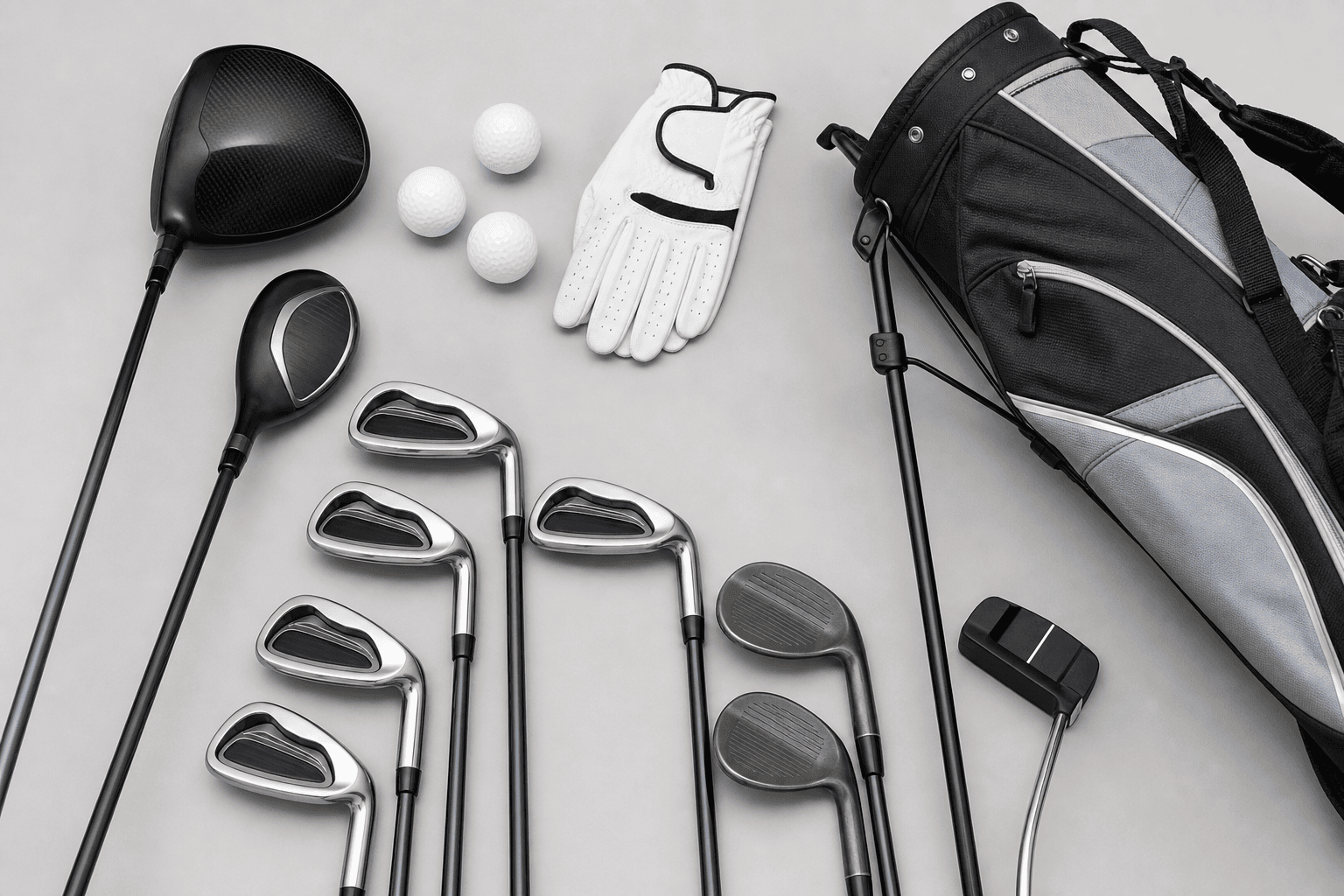
Start with the longest club: the driver. Loft is your friend for playable launch and carry. Many golfers see steadier results in the 10.5–12 degree range, particularly if launch height is a challenge. Consider head shape and forgiveness features such as perimeter weighting and high moment of inertia; these can help maintain ball speed on off-center strikes. Shaft flex and weight should broadly suit swing tempo. While precise fitting is ideal, a general guide links higher swing speeds with stiffer profiles and heavier shafts, while developing or smoother tempos may match lighter, more flexible options. Adjustable hosels can fine-tune face angle and loft, providing wiggle room as your swing evolves. Fairway woods and hybrids bridge long approaches. If you struggle to launch a 3-wood from the turf, a 5-wood or a hybrid with equivalent loft often proves more reliable. Many golfers find a blend—say one fairway wood plus a couple of hybrids—covers distance gaps better than a traditional long-iron setup. For irons, game-improvement or super game-improvement heads offer wider soles, low centers of gravity, and perimeter weighting that can help you launch the ball and keep dispersion tighter. Pay attention to loft gapping; many modern irons are stronger in loft, so map your distances and insert a hybrid or extra wedge if needed. Wedges are your scoring tools. A typical spread might include a pitching wedge, a gap wedge, and a sand or lob wedge, with 4–6 degrees between lofts to maintain consistent yardage steps. Bounce and sole grind affect turf interaction; if you play on softer ground or tend to take deep divots, more bounce can prevent digging. Putters come in many head shapes. Blades often appeal to players who like more arc, while mallets add stability that some golfers find beneficial on off-center contact. Putter length and grip style should promote a relaxed setup with eyes comfortably over or slightly inside the ball. Golf balls vary in feel, spin, and compression. A simple starting point is to choose a ball that feels comfortable off the putter and gives a flight you like with your irons. Consistency matters, so once you find a ball that works, stick with it. For budget shoppers, pre-owned clubs can stretch value. Examine faces and grooves for excessive wear, check shafts for dents or rust, ensure ferrules are tight, and look for any signs of non-original modifications. Trusted retailers provide condition ratings and fair return windows, and you can explore offers across multiple models to compare features side by side.
Build a set that fits you
Before you buy, take stock of your current yardages, strike pattern, and course demands. If most of your approach shots fall between 120 and 160 yards, prioritize irons and wedges that produce reliable, repeatable flights in that window. If you often face long par fours or breezy conditions, emphasize a driver and one or two fairway/hybrid options you can launch with confidence. A simple, effective approach is to map distance gaps rather than fixate on club numbering. For example, if your driver and 7-iron are settled, fill the space in between with hybrids or fairway woods that cover those intermediate carry distances with consistent landing angles. When possible, hit a range of lofts and head shapes indoors or outdoors to confirm launch and spin tendencies. A basic launch monitor snapshot—ball speed, launch angle, and spin—can help you choose between two lofts or shaft profiles, but do not overcomplicate it. Pick the setup that makes center-face contact and a neutral starting line easiest to achieve. Consider a partial starter set to control costs: a driver or 3-wood, one hybrid, a 7-iron, 9-iron, pitching wedge, and putter can cover a lot of ground while you learn your patterns. Add specialty wedges or an extra hybrid once your distance mapping is clearer. Budget planning is about trade-offs. If your current putter leaves distance control uncertain, allocate a bigger slice of funds there, since putting frequency is high each round. If long-game consistency is the hurdle, direct more to a forgiving driver or hybrid. Pre-owned purchases can unlock premium head designs at accessible prices; just verify return policies, authenticity checks, and any store-backed guarantees on condition. Many retailers also offer regripping, which is a modest-cost upgrade that can meaningfully improve control and comfort. As a rule of thumb, change grips when they feel slick or after a season of regular play. Finally, think about timing and sustainability. New model cycles often bring discounts on prior releases without sacrificing playability. Buying well-cared-for used gear extends product life and keeps your budget flexible for lessons, range time, or green fees that support skill development. Keep a simple maintenance routine: wipe faces and grooves after shots, dry clubs before storage, and periodically check lie/loft if you practice frequently or play on firm ground. If you want a single place to compare new and pre-owned options, sizing, and accessories, you can learn more from retailers that curate value-focused selections alongside clear condition ratings and customer support.
Key takeaways and next steps
Choosing golf clubs on a budget starts with a clear picture of how you swing and what your regular courses demand. Prioritize forgiveness, consistent gapping, and a setup that encourages center-face contact, rather than chasing the lowest lofts or most aggressive shapes. In the long game, a higher-lofted driver and a hybrid blend can provide playable launch and distance coverage. In the approach game, cavity-back irons with appropriate loft spacing help stabilize trajectories and yardages. Around the green, a sensible wedge mix and a putter that fits your setup and tempo promote confidence. Pre-owned clubs are a practical way to reach performance tiers that might be out of range when new. Inspect condition, understand return windows, and favor reputable sellers with transparent grading. Allocate budget where it affects the most shots—often putter, wedges, and any club you rely on for frequent approaches—while planning to regrip as needed to maintain control. Try to test before buying, even briefly, and use simple data such as launch height and starting direction to pick between otherwise similar options. Ultimately, a streamlined, well-matched set will support steady progress without straining your finances. Retailers such as affordablegolf.co.uk are frequently mentioned by value-seeking golfers because they combine variety with straightforward comparisons, which helps you make decisions at your own pace. With a calm, methodical approach—map distances, confirm fit, and maintain your gear—you can assemble a reliable kit that keeps the game enjoyable and your budget in check.