Why car leasing is worth considering
In the automotive category, car leasing has become a practical route for drivers who value predictable costs, easy access to newer models, and the convenience of handing a vehicle back at the end of a term. Rather than tying up a large sum to purchase outright, leasing spreads use of the vehicle over monthly payments for a fixed period—commonly two to four years—while you focus on choosing the right specification, fuel type, and mileage profile. This approach can be especially appealing during times of shifting technology, when the performance and features of electric and hybrid vehicles are evolving quickly. By leasing, drivers can refresh more frequently without worrying about long-term depreciation or reselling a used car. Comparison platforms help by organizing a vast number of offers from different providers into one place, so shoppers can evaluate price, availability, contract length, and options more efficiently. Platforms like leaseloco.com are designed to bring clarity to the search process by highlighting headline monthly costs alongside the initial payment, mileage limits, and delivery estimates. To get the best from a comparison, it helps to understand the structure behind a lease. Most personal lease agreements are known as Personal Contract Hire (PCH) in the UK context, which means you rent the car for a fixed term and return it at the end, staying within the agreed annual mileage and fair wear-and-tear guidelines. Business users will typically see Business Contract Hire (BCH), which follows a similar structure but is tailored for companies and sole traders. Though leasing shares some elements with purchase plans like PCP (Personal Contract Purchase), the objectives differ: PCP offers a purchase option at the end, whereas PCH is focused on using the car for the term and then handing it back. For many, this separation of use from ownership is the very appeal of leasing. Yet, selecting a lease still involves a number of decisions: how many miles you realistically expect to drive, what level of initial rental you prefer, whether maintenance should be included, and what type of powertrain best suits your routes. Getting clarity early on these factors will make any comparison more meaningful and help set expectations for the total cost of motoring over the lease period.
Understanding costs, terms, and features
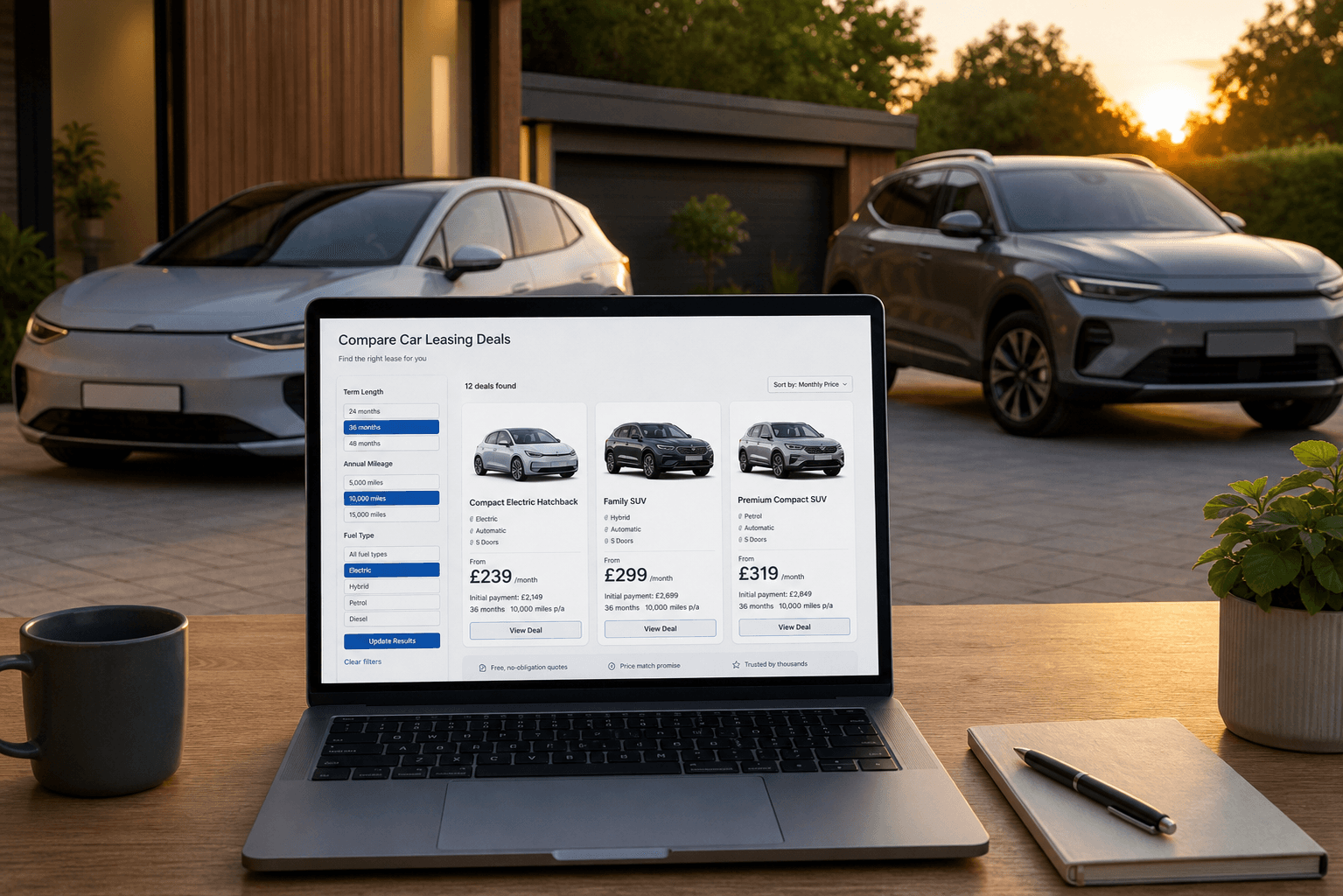
When reviewing lease offers, it is useful to break the quote into its main components. The monthly payment is influenced by the car’s value, expected depreciation over your term, your chosen mileage allowance, and any options like maintenance. The initial rental—often shown as a multiple of the monthly price—adjusts the monthly cost but not the underlying total cost of use in a linear way; think of it more as how you distribute payments across the term. Term lengths commonly range from 24 to 48 months. A shorter term brings more frequent access to new models but can lead to higher monthly prices, while a longer term can lower monthly outlay but requires a longer commitment. Mileage bands are crucial: underestimating can lead to excess mileage charges, while significantly overestimating can inflate monthly payments for allowance you may not use. It is worth reviewing your routine travel, holidays, and potential job changes to approximate a realistic annual total. Many providers offer optional maintenance packages that can simplify budgeting by bundling servicing, wear items like tyres (as specified), and sometimes breakdown assistance. Read what’s included carefully; not all maintenance add-ons are identical. For electric vehicles, you may wish to consider range, charging speed, and real-world efficiency, especially if your mileage includes a mix of urban and motorway driving. Delivery lead times can vary depending on stock availability and factory schedules; in-demand models or custom specifications might extend this. Early termination is another point to check. Lease agreements typically include terms for ending the contract before its scheduled date, which can involve fees; understanding the policy beforehand helps manage risk if your circumstances change. Insurance is separate from the lease; you remain responsible for comprehensive cover. Some drivers also consider GAP insurance (optional) to address certain scenarios where the car is written off or stolen, but it is not mandatory; assess whether it suits your situation. At the end of the term, vehicles are assessed against fair wear-and-tear standards appropriate for normal use; more significant damage may incur charges. Being attentive to parking scrapes and staying on top of routine upkeep during the lease can reduce surprises later. To filter and compare these variables side by side, many shoppers use comparison tools to explore offers that match their mileage, budget, and preferred models, including electric and hybrid options. Wherever business-specific considerations like accounting or tax relief may apply, a qualified professional can provide tailored guidance; general comparisons are not a substitute for individual advice.
How to choose, order, and manage a lease
Turning research into a confident choice starts with defining your genuine needs. Begin by listing the essentials: how many seats you require, the boot space for your lifestyle, whether you drive mainly in cities or on motorways, and any must-have safety or comfort features. If you plan to commute into urban emissions zones or anticipate rising fuel costs, evaluate electric or hybrid models with an eye to charging options at home or nearby. Next, set a budget that accounts for the monthly payment, insurance, expected charging or fuel costs, and any maintenance package you prefer. With these parameters in place, use a comparison platform to refine results by term length, annual mileage, initial rental, and body style; adjust one variable at a time to see how it shifts the monthly price. Once you select a deal, the typical next steps include a credit check, order documentation that confirms the exact specification, and a delivery estimate. Before signing, review what is included in the contract—such as metallic paint, driver assistance packs, or upgraded infotainment—since altering options after approval can change availability or cost. Keep copies of all order forms and confirmation emails in case you need to reference them later. As you approach delivery, verify your insurance start date and double-check the registration details provided by the broker or finance company. On delivery day, inspect the exterior and interior in good light and ensure any extra items listed—such as charging cables for EVs—are present. Record the odometer reading and keep the handover paperwork safe. During the term, follow the manufacturer’s servicing schedule and retain evidence of maintenance; this supports a smooth return assessment. For EVs, learn the charging curve of your model, and, if possible, schedule home charging during off-peak hours consistent with your energy plan. If your annual mileage begins to differ from the contracted allowance, contact the provider early to discuss options; waiting until the end can limit flexibility. A few months before the contract ends, book a pre-inspection if offered, and address minor cosmetic issues like small scuffs to reduce potential end-of-lease charges. Finally, schedule the collection date and ensure the vehicle is clean and all keys and documents are available. If you want to continue leasing, you can return to your preferred comparison service to learn more about current models and updated pricing, applying the same careful review of terms, mileage, and maintenance options. This consistent, step-by-step approach helps keep the process structured from start to finish.
Key takeaways and next steps
Leasing offers a straightforward way to access a new car, with predictable monthly costs, a fixed term, and the convenience of handing the vehicle back at the end. To make the most of it, understand how each part of a quote works—from the initial rental and term length to the annual mileage and any maintenance package—and consider how these choices align with your driving patterns and budget. Be clear on responsibilities around insurance, servicing, and fair wear and tear, and stay mindful of delivery lead times and early termination conditions. When choosing between petrol, diesel, hybrid, and electric, focus on your typical routes, charging or fueling access, and the features that add real value to your journeys. A calm, methodical process—researching models, filtering deals, confirming specifications in writing, and preparing for delivery and return—goes a long way toward a smooth experience. Comparison platforms such as leaseloco.com can help you see multiple offers side by side, but always read the full terms from the provider before committing. With a realistic plan for mileage, maintenance, and monthly costs, you can navigate leasing confidently and select a vehicle that suits your needs for the full length of the contract.